Ilios Terrace
- to
- Unreal Engine 5
- Map Concept
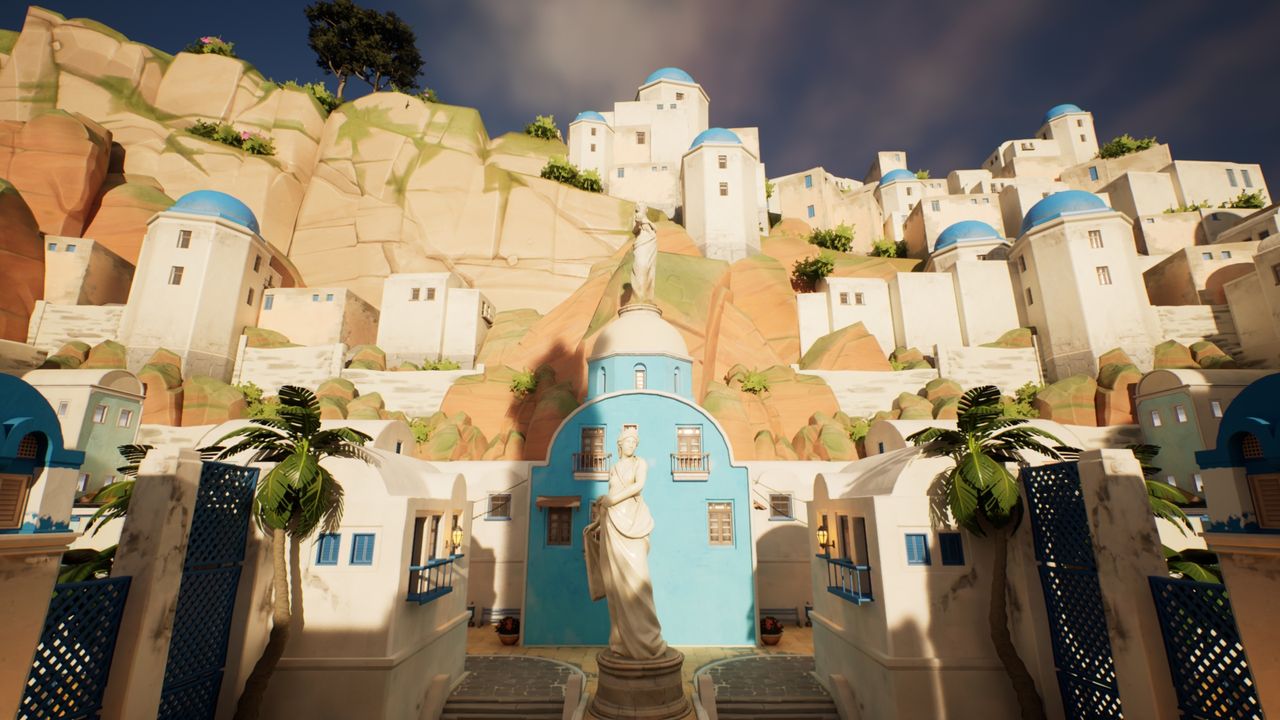
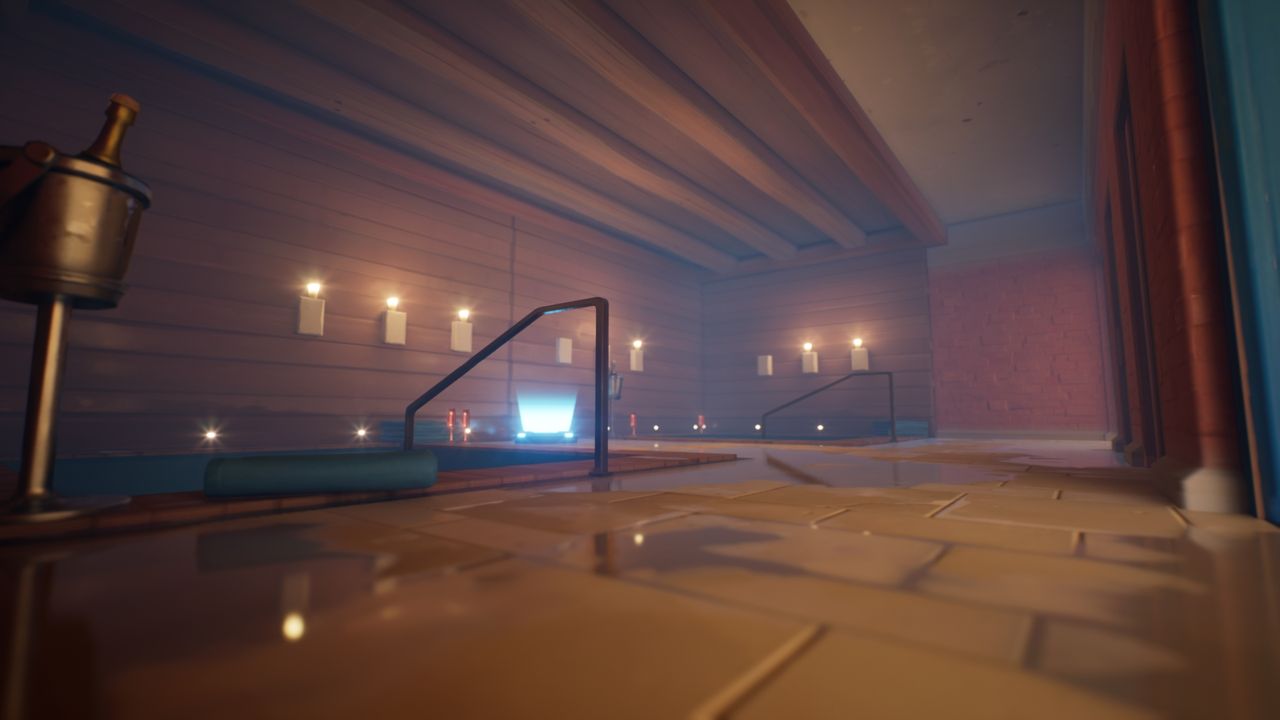
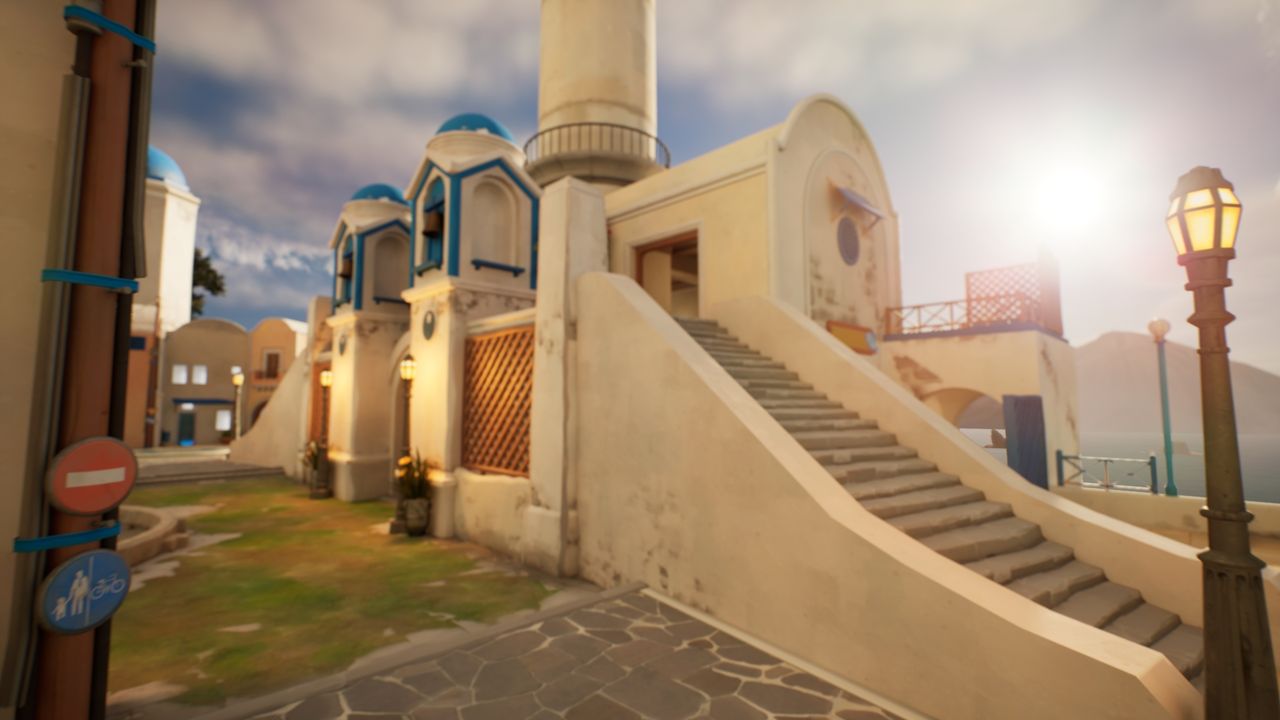
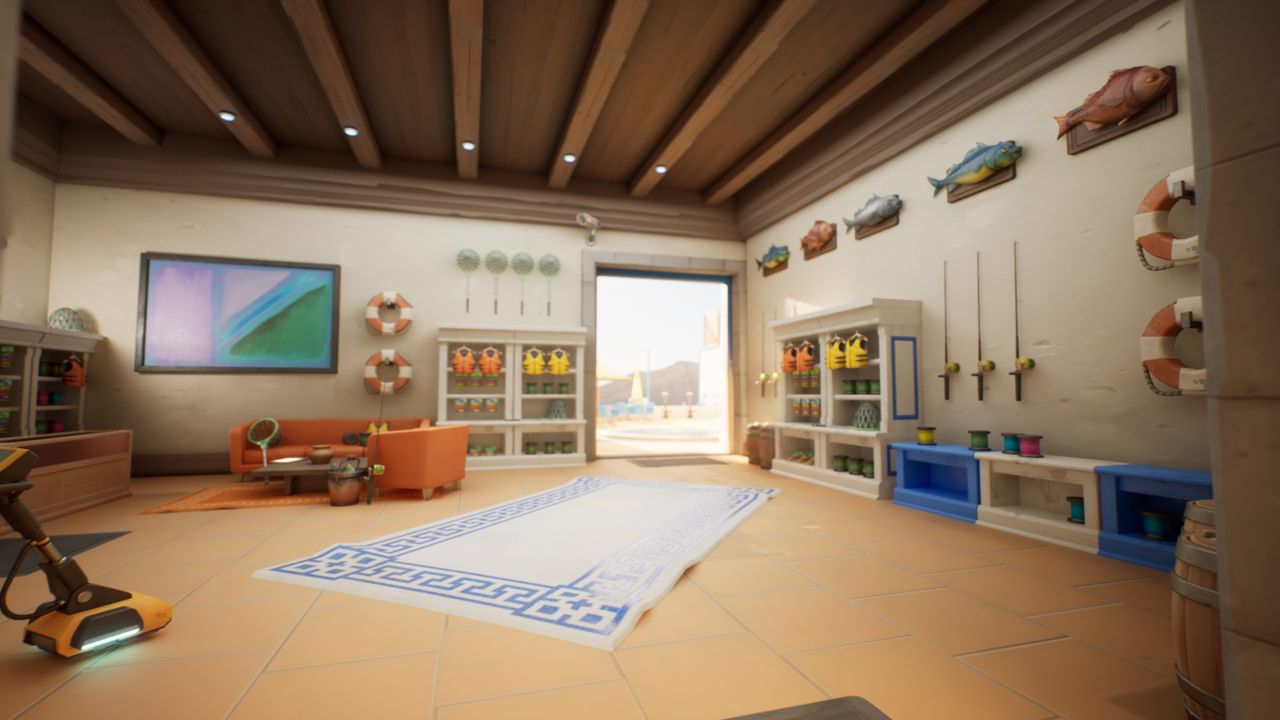
Perched high upon a hillside overlooking Greece's Aegean Sea, this Overwatch® 2 Map Concept boasts panoramic views, free Wi-Fi and spa access, bottomless wells, and even a lighthouse. Ilios Terrace is a great place to eliminate your enemies!
Team
Solo Project
Role
Level Designer
Tools
Overview
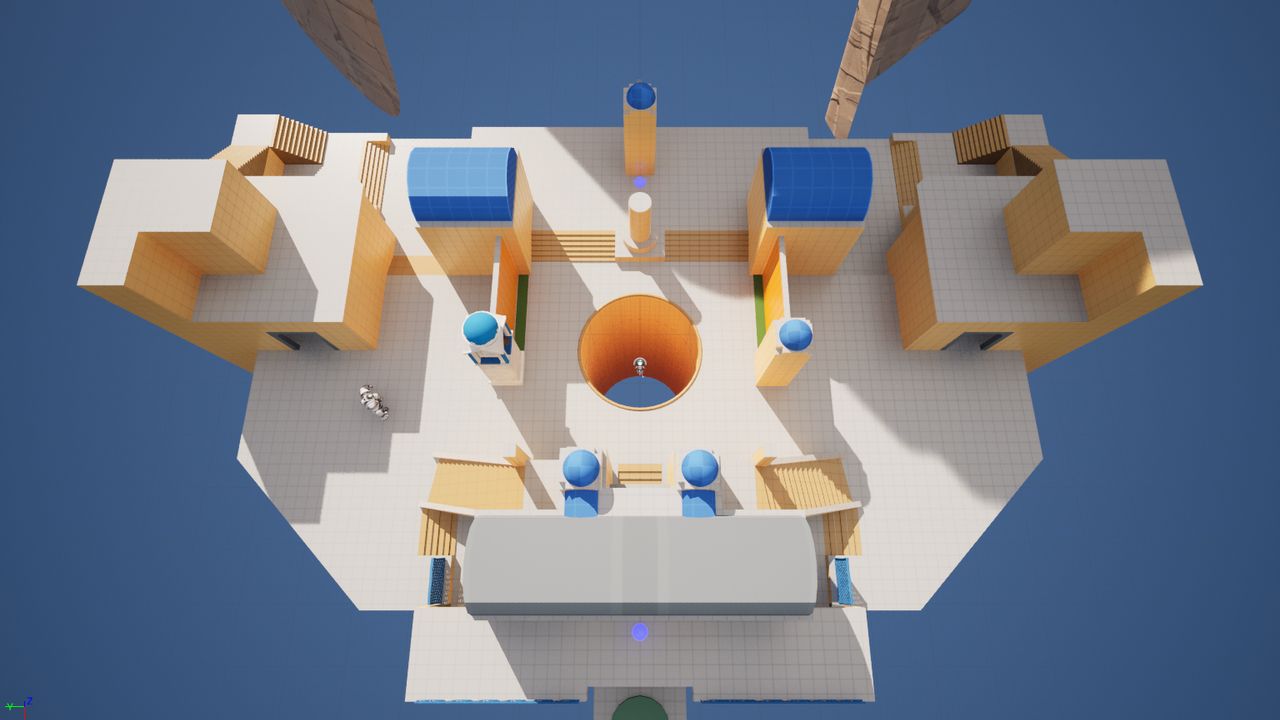
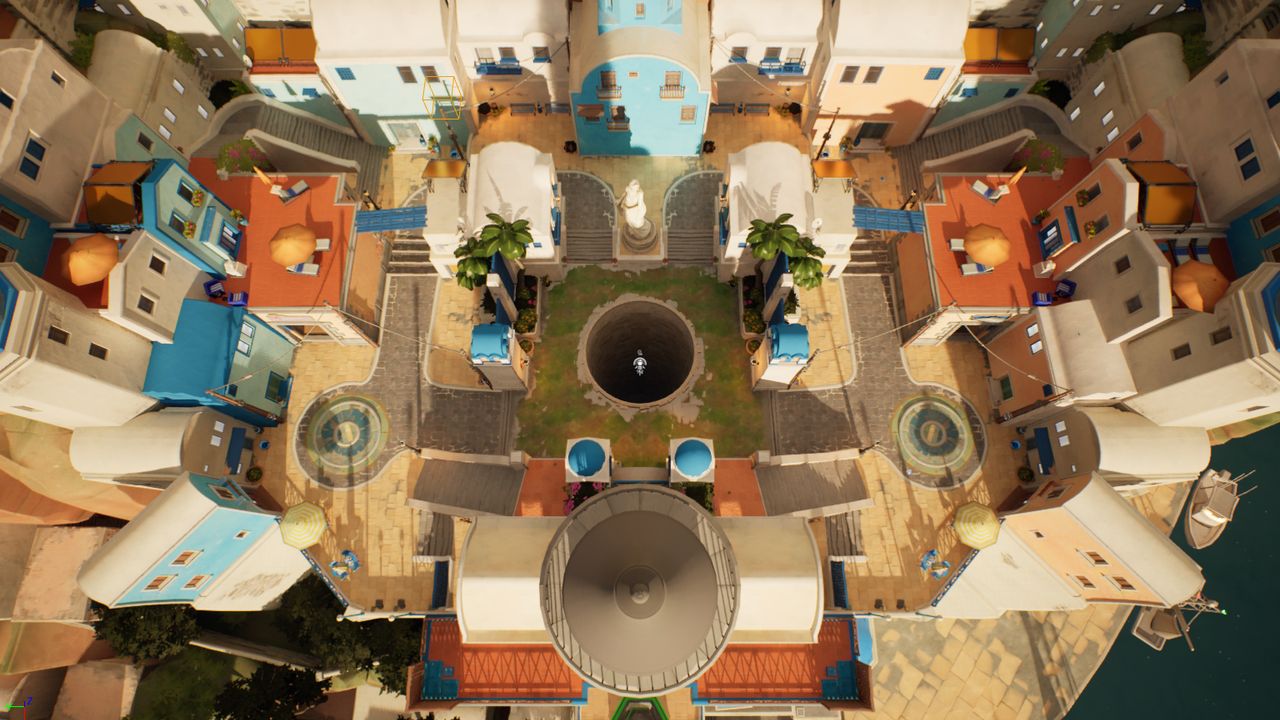
For Ilios Terrace, my primary goal was to create an engaging and visually appealing custom Overwatch 2 map designed in Unreal Engine 5, utilizing the vibrant environment and architecture of Ilios. Alongside this, I aimed to address the scaling challenges faced in my previous project, Hana No Komichi, ensuring correct scaling and proportions in the new design.
As Overwatch 2 does not currently support a map editor, my focus was to showcase my level design skills and understanding of Overwatch’s gameplay mechanics while adapting to the limitations of Unreal Engine 5. I considered feedback from fellow level designers and Overwatch players to create a level that captures the essence of Overwatch’s map design and offers an immersive experience.
Key Contributions
- Blocked out an Overwatch Elimination Map in Unreal Engine 5.
- Iterated on the level based upon collected feedback from designers and Overwatch players.
- Performed an art pass using existing Ilios assets. Some assets were modified using Maya and Unreal Engine's modelling tools.
Key Goals
- Create a layout that promotes diverse gameplay strategies and hero choices
- Ensure consistent scaling and proportions to maintain the visual style and gameplay balance of Overwatch
- Develop a clear and natural player flow throughout the level, guiding players intuitively
- Incorporate verticality and varied traversal options to encourage creative tactics
- Design memorable landmarks and focal points to assist with player navigation and orientation
- Design subtle visual distinctions between opposing sides of the map to enhance the aesthetic appeal while reducing apparent symmetry
- Create distinct areas within the map to provide players with a variety of combat scenarios and strategic choices
Conceptualising
During the conceptualising phase, I brainstormed ideas and decided on the overall direction for the project. I chose the elimination game mode, as it aligned with the project’s time constraints and allowed me to explore design possibilities within a smaller playspace. The decision to focus on Ilios, rather than other maps like King’s Row, was driven by its already symmetrical layout and potential for incorporating strong verticality.
Goals
- Improving upon the scaling issue from Hana No Komichi
- Creating a balanced and engaging gameplay experience for a variety of hero types
- Ensuring intuitive navigation throughout the level
- Designing a visually appealing environment that complements the Overwatch universe
Referencing
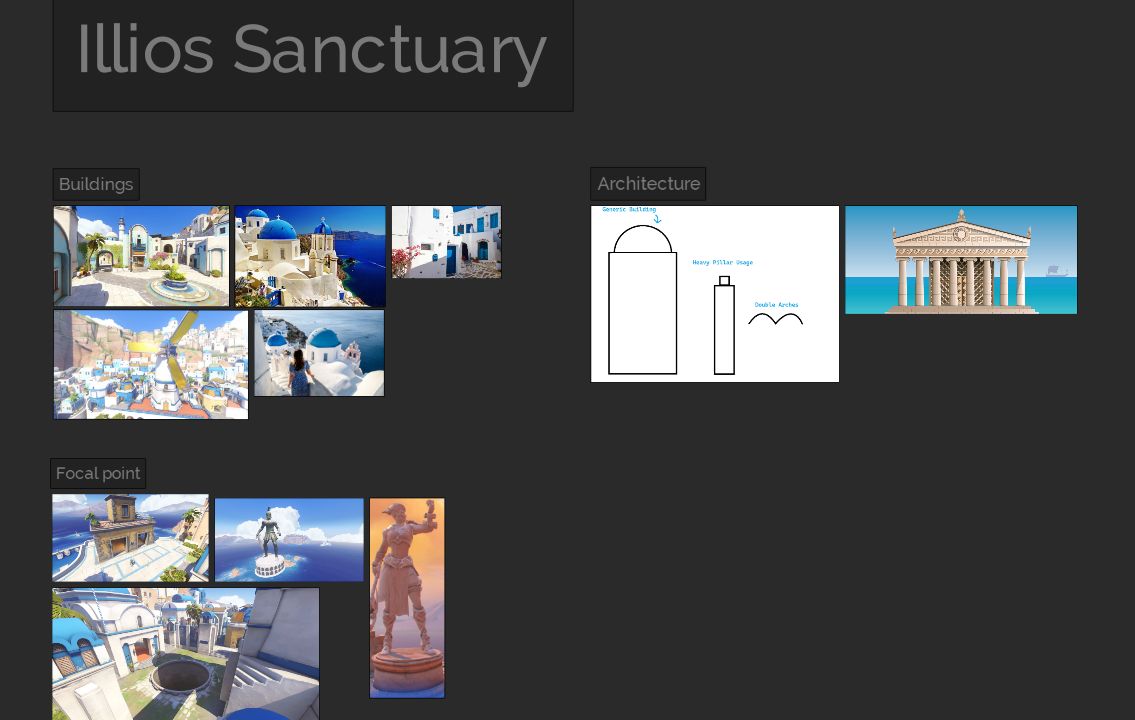
In the referencing stage, I collected and collated reference images and analysed existing levels and mechanics in Overwatch, particularly focusing on Ilios maps and elements consistent across all Overwatch maps. This process allowed me to better understand design patterns and visual styles that would fit within the Overwatch universe. Additionally, I collated reference images in a PureRef board of Ilios and the area it’s based off, the Santorini Islands.
Goals
- Emphasising verticality to enhance gameplay strategies and remain consistent with other Ilios levels, giving a sense of cohesiveness to the level
- Designing a level that complements the symmetry of elimination mode while also having subtle variation
- Designing diverse combat zones within the map to accommodate a wide range of heroes, supporting various playstyles and strategies to increase overall roster viability
- Ensure smooth navigation and clear sightlines for a fluid player experience.
- Incorporate unique environmental landmarks to make the map memorable and visually interesting, such as a “main” building common throughout most Elimination maps.
- Design cover and vantage points that cater to different hero abilities and playstyles
- Capture the dense, close-quarters gameplay characteristic of Ilios maps, distinguishing it from more open maps like Junkertown
Prototyping
During the prototyping stage, I focused on turning the design goals established in the conceptualizing and referencing phases into a tangible layout for the Ilios Terrace map. This involved several key steps:
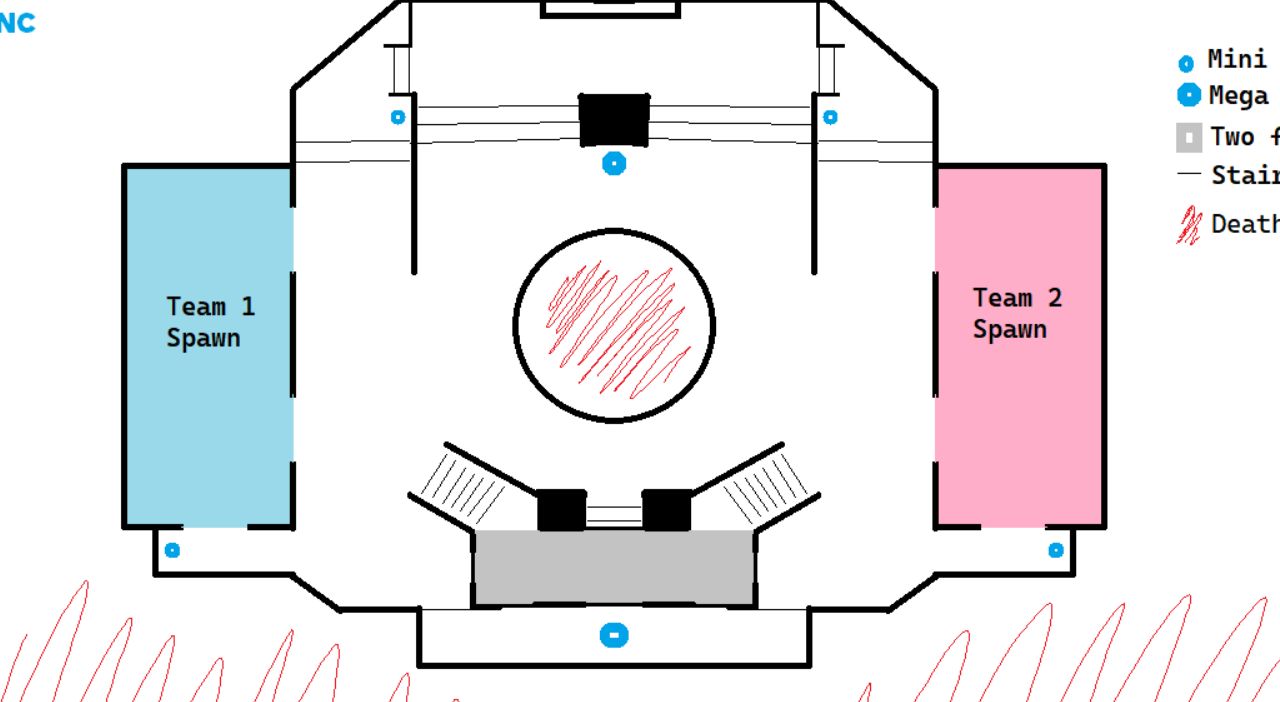
2D Whiteboarding — I started by creating a basic 2D top-down layout using Paint. During this stage, I aimed to address the design goals by incorporating verticality, drawing inspiration from other Ilios maps. I designed high grounds above the player spawns, as well as a central building with multiple levels, which would support a wider range of heroes and their abilities. The whiteboard design also featured a symmetrical layout with a death hole in the middle, similar to Ilios Well, to maintain consistency with other Ilios maps and their vertical gameplay elements. The layout included broken sightlines with walls and death drops, which are characteristic of Ilios maps and cater to different hero abilities (Knockback abilities), promoting diverse team compositions.
By focusing on these design goals during the whiteboarding stage, I was able to create a layout that effectively captured the essence of Ilios maps while also ensuring that the map would provide varied gameplay experiences for different heroes.
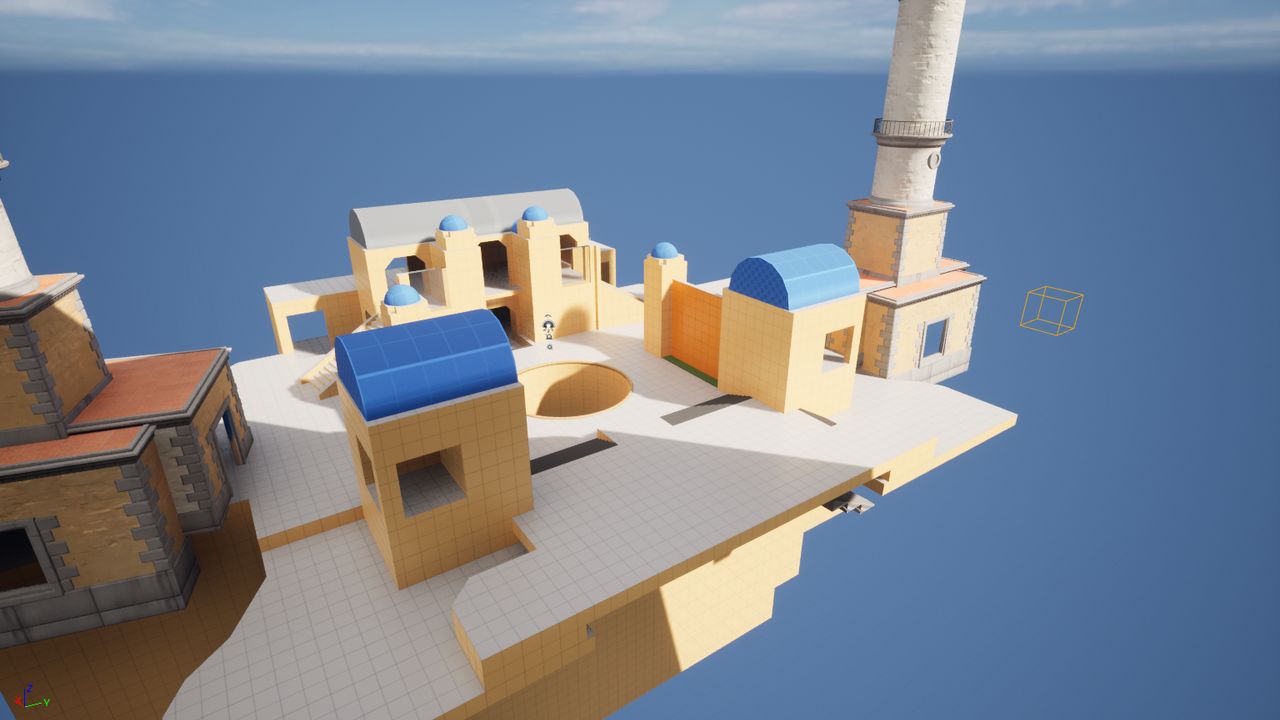
3D Blockout — Using Unreal Engine 5, I constructed an initial 3D blockout of the map based on the 2D whiteboard layout. During this stage, I made several adjustments to better align with the design goals, such as:
- Ensuring correct scaling based on reference images to provide a consistent gameplay experience across the Overwatch roster, addressing the scaling issues from previous projects
- Moving walls closer together to create a denser, close-quarters environment, which was a goal derived from analyzing other Ilios maps
- Adding extra high ground to the main building to provide more sightlines and strategic options for various heroes, further emphasizing the verticality goal
- Adjusting the size of the spawn areas to better fit the elimination game mode and the constraints of a small playspace
- Adding a jump pad behind the main building, this provided easier access to the building for heroes with limited mobility, and allowed for new playmaking opportunities for players engaging on this area.
By making these adjustments during the prototyping stage, I was able to refine the map’s structure and gameplay, ensuring that it aligns with both the initial and specific design goals established during the conceptualizing and referencing phases.
Feedback & Iteration
The feedback and iteration stage played a crucial role in refining the map’s design and ensuring that it effectively met the goals established during the conceptualising, referencing, and prototyping stages. The process involved the following steps:
- Feedback Gathering — Although the Ilios Terrace map is not playable in Overwatch 2, I shared images and the 3D blockout with fellow level designers and Overwatch players to gather their valuable feedback. This allowed me to identify any potential issues with the map’s design and understand how it might perform in terms of gameplay, pacing, and challenge.
- Analysing Challenge and Pacing — Based on the feedback received, I analysed the map’s layout to determine if it provided the right balance of challenge and pacing for players. I focused on aspects such as sightlines, cover placement, and verticality, which are crucial for promoting diverse hero usage and creating engaging gameplay experiences.
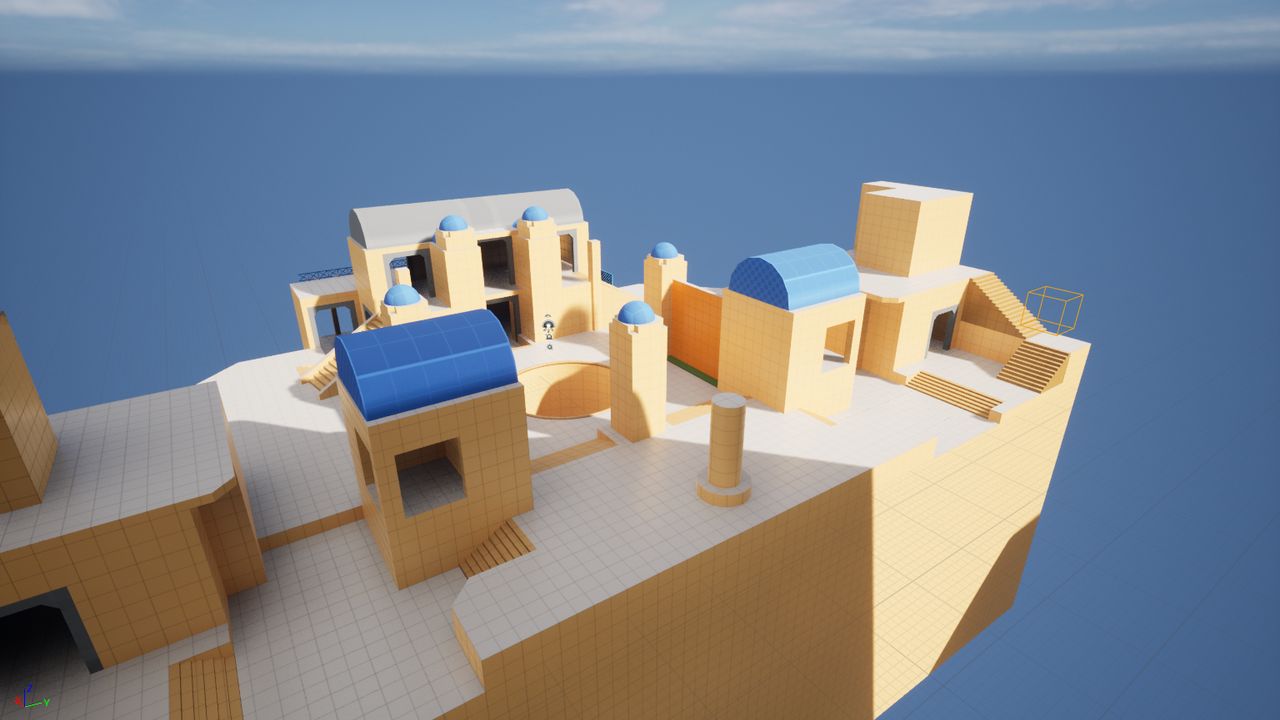
- Refining and Iterating on Blockout and Design Goals — With the insights gained from feedback and analysis, I refined the 3D blockout and adjusted certain elements to better align with the design goals. For example, I removed the main high-ground staircase wall to provide less cover and reduce the strength of an otherwise very protected point. This change made the high ground more accessible and encouraged dynamic engagements from any verticality.
Feedback also suggested that there was only one real high ground, so I added a path to the spawn high grounds, allowing for duelling between the different high grounds and more options for players to contest each other. This not only increased the strategic depth of the map but also catered to a roster of heroes with varying mobility capabilities.
Additionally, I shrank some of the high grounds to provide a more balanced experience and to avoid overly advantageous positions that could negatively impact the gameplay flow.
Through the feedback and iteration stage, I was able to continuously improve the map’s design, ensuring that it effectively met the design goals and provided players with a fun and engaging experience.
Implementation
During the implementation phase, my primary focus was on bringing the Ilios Terrace map to life visually while ensuring it remained consistent with the established design goals. This stage involved the following steps:
- Using Existing Overwatch Assets — To maintain visual consistency with other Overwatch maps and create a recognisable aesthetic, I utilised existing assets from the game. This allowed me to art up the level and transform the blockout into a fully-realized environment that closely resembled the distinctive look and feel of Ilios.
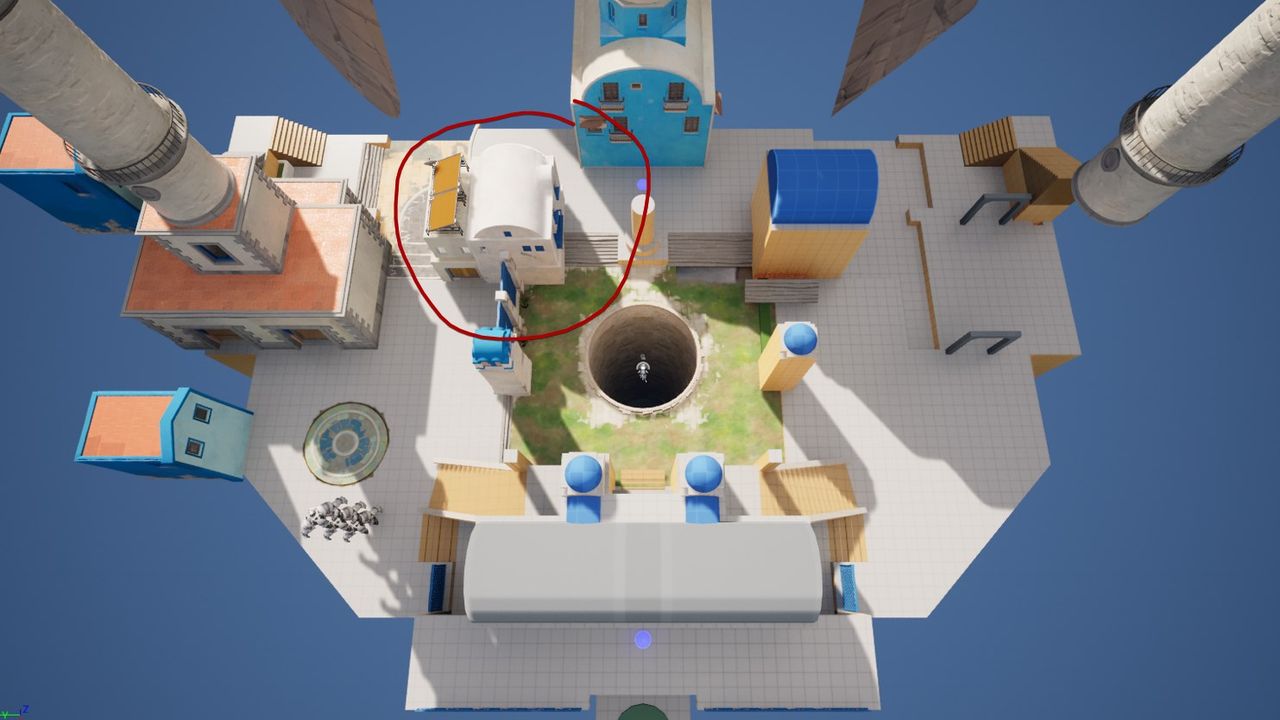
- Minor Modifications — While implementing the assets, I made some minor adjustments to the level design to better fit the available assets and further enhance the gameplay experience. For example, the corner building was made substantially larger providing more cover to players who opt to take this route of attack onto the centre of the map. Additionally it led to more boop opportunities around the centre hole.
- Visual Distinction — To provide a clear visual distinction between both sides of the map, I incorporated different colour schemes for each side, with one side featuring red accents and the other blue. This not only helped to eliminate any sense of symmetry but also ensured consistency with the other Ilios maps. Additionally, it served to aid in player navigation, giving each side a slightly different feel.
- Art Pass — With the level’s design finalised, I performed an art pass to refine the visuals and enhance the map’s overall presentation. This involved fine-tuning elements such as lighting, 3D models, materials, and textures to create a polished and immersive environment that players would enjoy exploring.
As a solo project, I relied on my own skills and the available assets to achieve the desired aesthetic and ensure the map adhered to the design goals.
Through the implementation stage, I believe I successfully transformed the Ilios Terrace map from a basic blockout to a visually engaging, fully “arted” level. One which embodies the essence of the Ilios setting and adheres to the design goals established during the project’s earlier phases.
Reflection
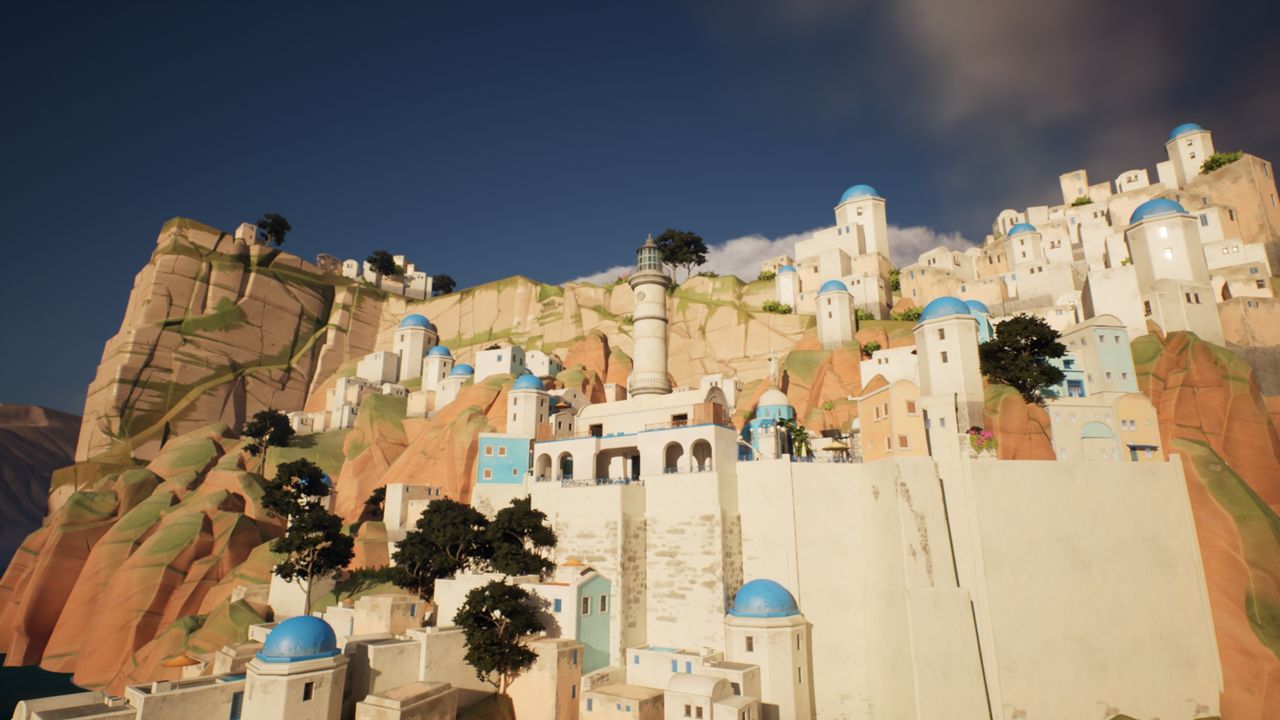
The Ilios Terrace project has provided valuable insights and experiences that I can apply to future level design projects. Reflecting on the finalised design, I have identified both successes and areas for improvement:
Successes
- Improved Scaling — Though not perfect, the scaling in the Ilios Terrace map was substantially better than in my previous project, Hana No Komichi. This demonstrates my growth and progress as a level designer.
- Authentic Visuals — The feedback regarding the visual design of the map was overwhelmingly positive, with players and designers alike praising its ability to capture the essence of Ilios and resemble a genuine Overwatch map.
Areas for Improvement
- Scaling — Despite my best efforts, some areas of the map were still slightly off-scale according to feedback from other designers. This is a reminder to continually refine my understanding of proper scaling in level design and apply this knowledge to future projects.
- Balanced High Grounds — The central building, while visually impressive, proved to be a stronger hold point than intended due to its substantial cover compared to other high grounds. In future projects, I should pay closer attention to balancing high ground positions to promote fair and engaging gameplay.
- Lighting — The map uses the auto-exposure of Unreal Engine 5 which unfortunately resulted in washed out shots and very dark interiors which is not ideal.
- The Well — The hole in the centre of the map is a staple of Ilios: Well, however in that map it is the primary objective of the player, in elimination the primary objective is to kill the enemy team. Despite the capture point being the well in Terrace, it still is an area players will primarily avoid.
Takeaways and New Goals
- Further Refine Scaling Skills — Continue to practice and refine my understanding of proper scaling in level design to achieve even greater accuracy in future projects.
- Explore Alternative High Ground Balancing — Experiment with different approaches to high ground balancing to create more engaging and fair gameplay scenarios.
- Use manual exposure — Disable auto-exposure and use a static exposure ensuring no dark areas are present.
- Collaboration — Seek opportunities to collaborate with other designers and artists on future projects to further enhance my skills and learn from their expertise.
- Risk and Reward — Provide stronger potential reward to players taking calculated risks in their navigation.
By reflecting on the successes and shortcomings of the Ilios Terrace project, I can set new goals and learn from my experiences to continuously improve as a level designer.
Acknowledgements
This is a custom map and is not representative of work by Blizzard Entertainment. I do not claim to be an employee of Blizzard Entertainment. Assets used are owned by Blizzard Entertainment.
I do not claim to have created or modelled any of the assets shown on this map.
Copyright
®2016 Blizzard Entertainment, Inc. All rights reserved. Overwatch is a trademark or registered trademark of Blizzard Entertainment, Inc. in the U.S. and/or other countries.
Blizzard Entertainment is a trademark or registered trademark of Blizzard Entertainment, Inc. in the U.S. and/or other countries. All rights reserved.