
- Unity
- Puzzle
- Game Jam
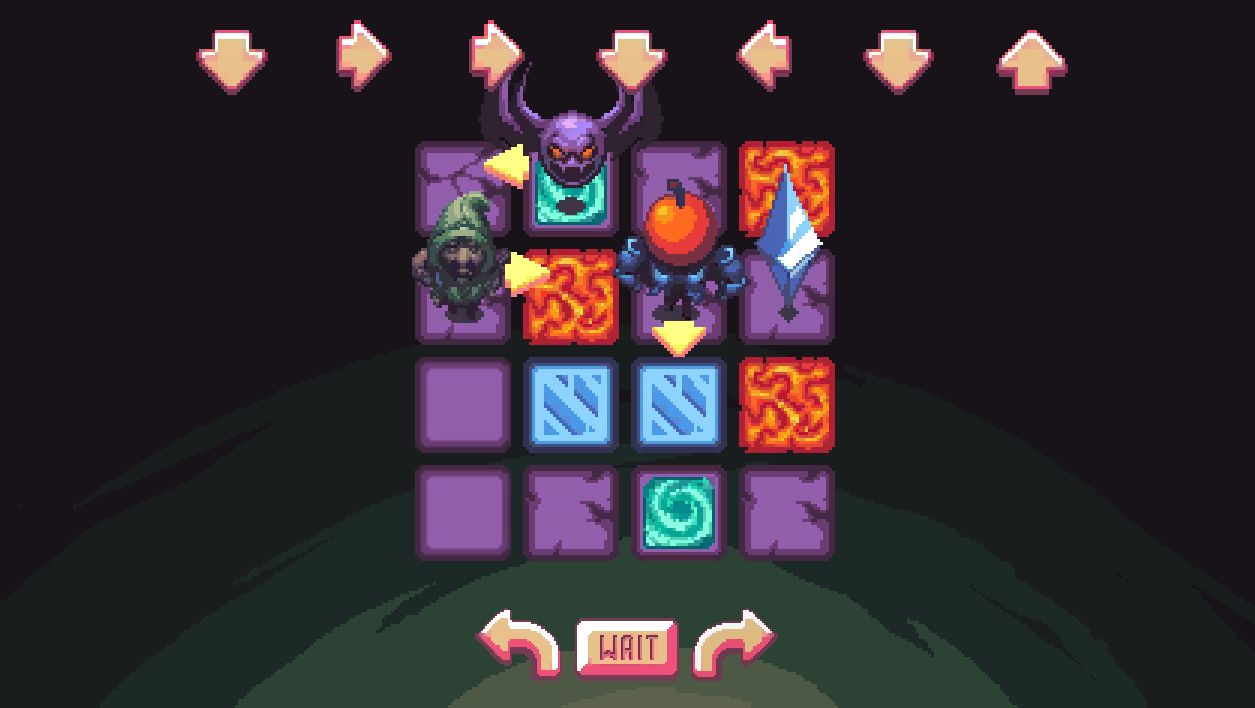
NecroTwister is a turn-based puzzle dungeon crawler where you control the level. Use telegraphed moves to guide the hero towards safety while avoiding deadly hazards and enemies. NecroTwister was designed for the 2023 GMTK 48-hour game jam "Roles Reversed".
Team
4 Person Project
Role
Technical/Level Designer
Tools
Languages
- C#
Overview
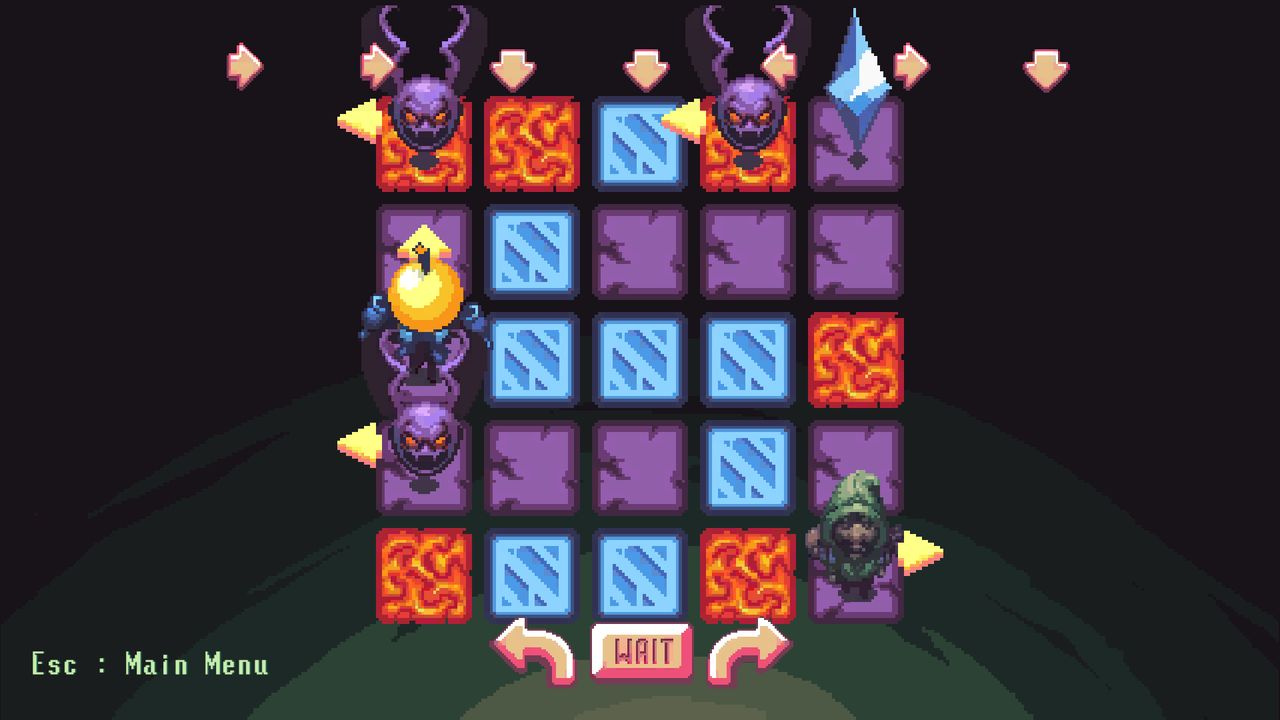
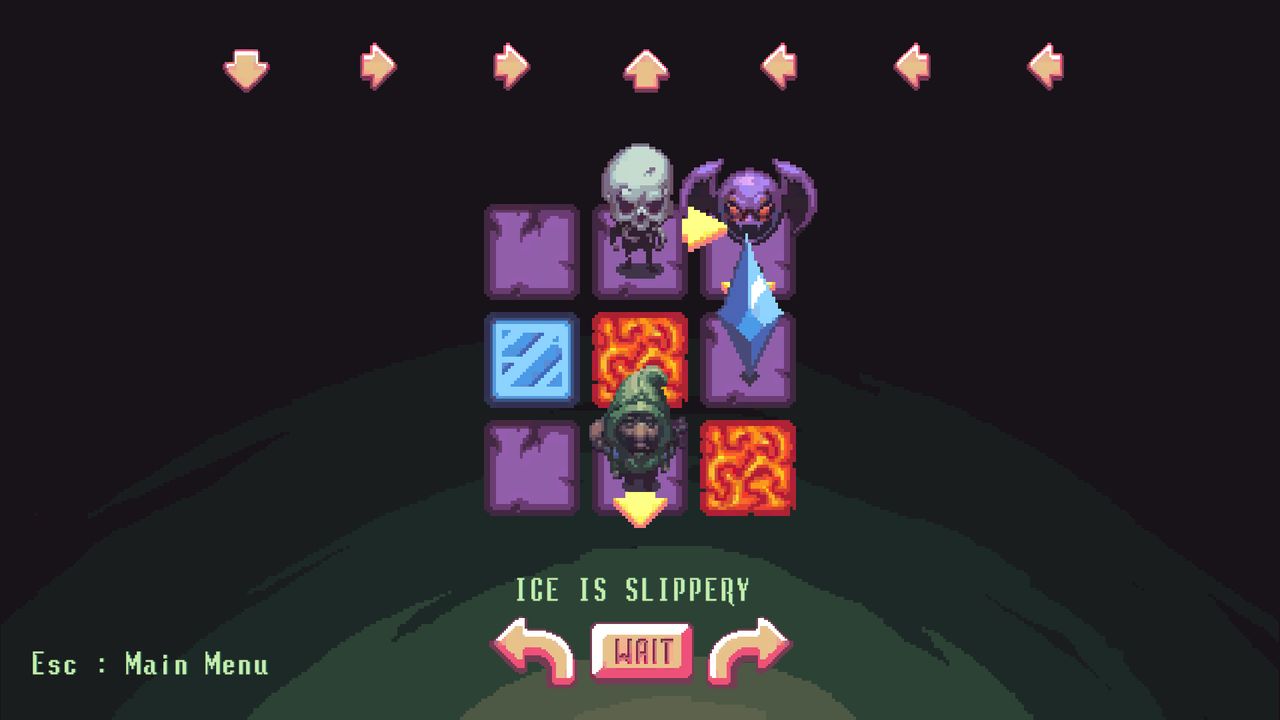
For NecroTwister, the primary challenge was to create engaging and intricate level layouts that engage the player with the (literal) unique twist. The levels rotate, introducing a challenging mechanic that leaves the player second-guessing every move they take.
Working primarily in Unity, and alongside highly experienced professional devs, this project was an opportunity to showcase my ability to conceptualise and execute complex level designs. While addressing the challenges of gradually introducing game mechanics and ensuring replayability, I aimed to foster a sense of discovery and reward in the player, creating those “Aha!” moments that elevate a good puzzle game to a great one.
Key Contributions
- Designed and storyboarded a variety of layouts in Photoshop and Figma.
- Designed levels with a difficulty curve, balancing difficulty while tutorializing mechanics for new players.
- Implemented all levels in Unity.
- Bug-fixing and basic feature implementation in C#.
Conceptualising
In the initial stages of NecroTwister, the choice was made to adopt a puzzle-dungeon crawler hybrid genre, aligning with the constraints of the game jam while allowing creative exploration within the grid-based design. The unique twist - rotating levels - was born out of the desire to innovate within the given jam theme, turning the static grid into a dynamic puzzle.
Design goals
- Crafting engaging puzzles that gradually introduce mechanics, avoid overwhelming the player
- Designing levels to promote strategic thinking, where the obvious solution may not be the correct one
- Creating an intuitive level structure that facilitates the rotation mechanic
- Craft levels that contain multiple enemy types, creating a diverse range of mechanics to introduce and challenge the player with
Referencing
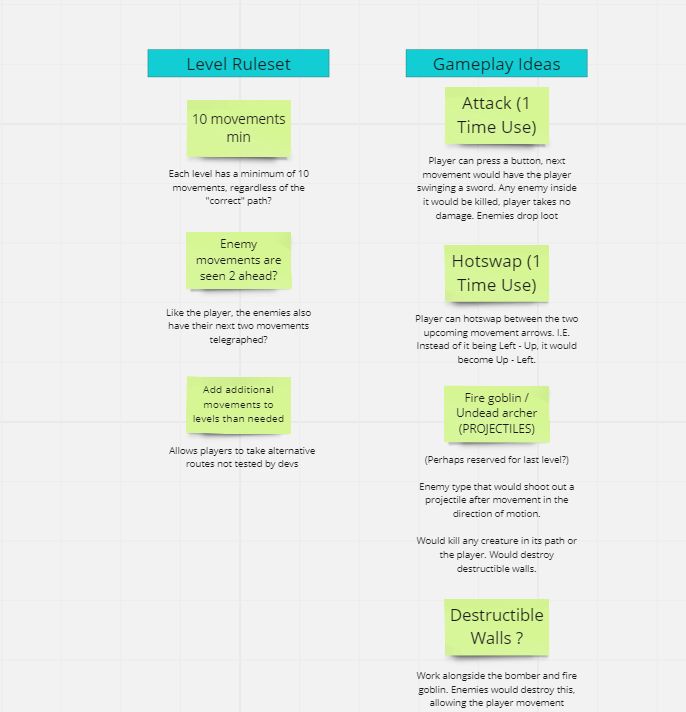
In the reference and exploration stage, my approach deviated from traditional methods due to the project’s limited timeframe and scope. Instead of gathering visual references or analysing other titles, focus was placed on concepting more gameplay mechanics and trying to establish some basic rules for levels. This reflection allowed me to hone in on and refine the design elements needed to enhance the gameplay experience in NecroTwister.
Design goals
- Add more movements than needed in levels to allow for multiple approaches to a given level
- Understanding and conceptualising how new tile features could be implemented into the level design to add depth and variety to the puzzles
- Anticipate how the unique abilities of enemies/traps could influence level design and player strategy
Prototyping
During the prototyping stage, I focused on turning the design goals established in the conceptualising and referencing phases into several maps that could be quickly implemented.
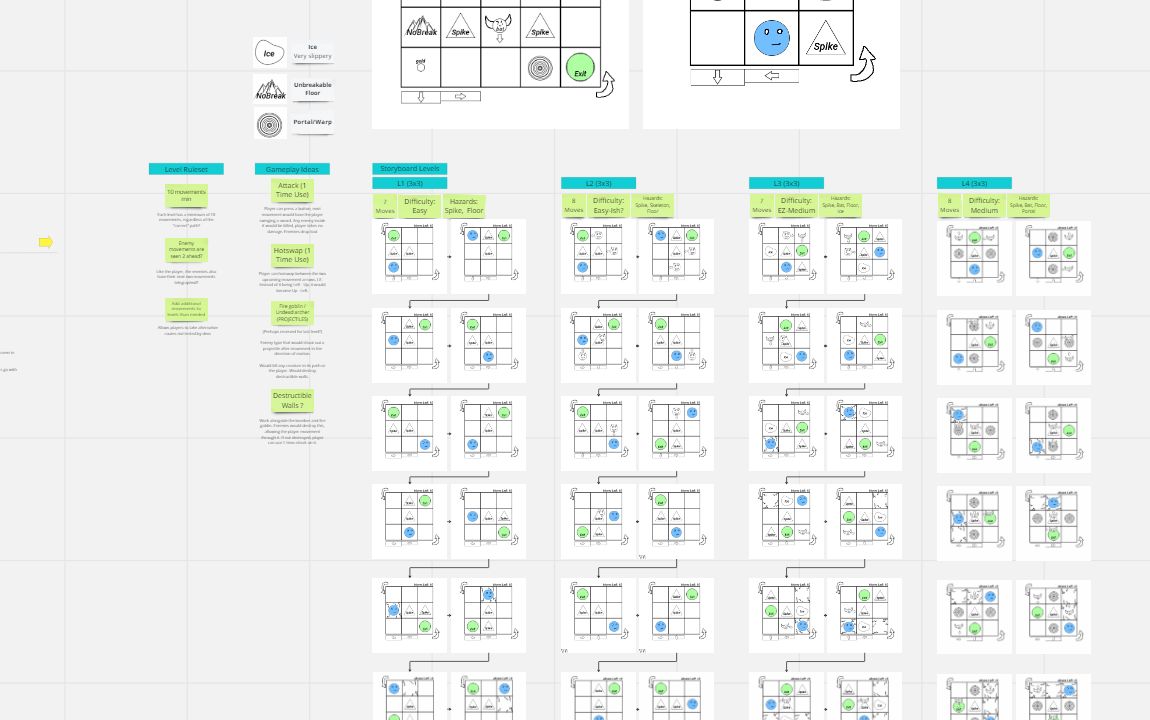
Storyboarding & 2D Whiteboarding — During this phase, I crafted a series of storyboards for NecroTwister’s levels. These step-by-step drawings outlined potential routes to complete each level, integrating a variety of ‘tricks’ or unexpected challenges to test the player’s adaptability and strategic thinking. I sought to subvert the ‘obvious’ solution, encouraging the player to pay close attention to enemy movement patterns and the overall game environment.
Levels were devised to gradually introduce the game’s mechanics, starting with simpler puzzles before adding complex twists. It was crucial to get this right. A healthy balance between challenge and tutorialisation will, of course, result in higher player retention — ideally leading to more reviews for the game jam.
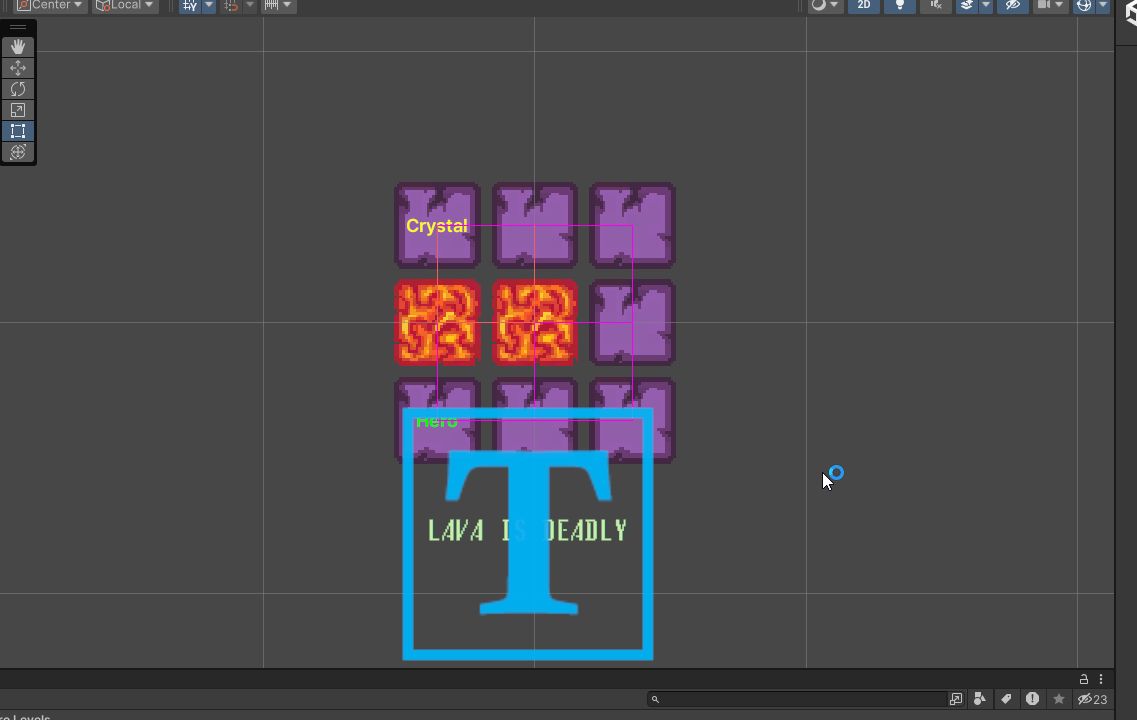
Level Implementation — Once the tools and systems required to implement levels were complete, the storyboarded levels were quickly integrated into the Unity project.
Feedback & Iteration
The feedback and iteration stage played a crucial role in refining the map’s design and ensuring that it effectively met the goals established during the conceptualising, referencing, and prototyping stages. The process involved the following steps:
- Feedback Gathering — Throughout implementation I continuously would playtest the level, adjusting movements, and iterating on the placement of enemies and tiles. I also gathered feedback from the other developers on the project throughout iteration.
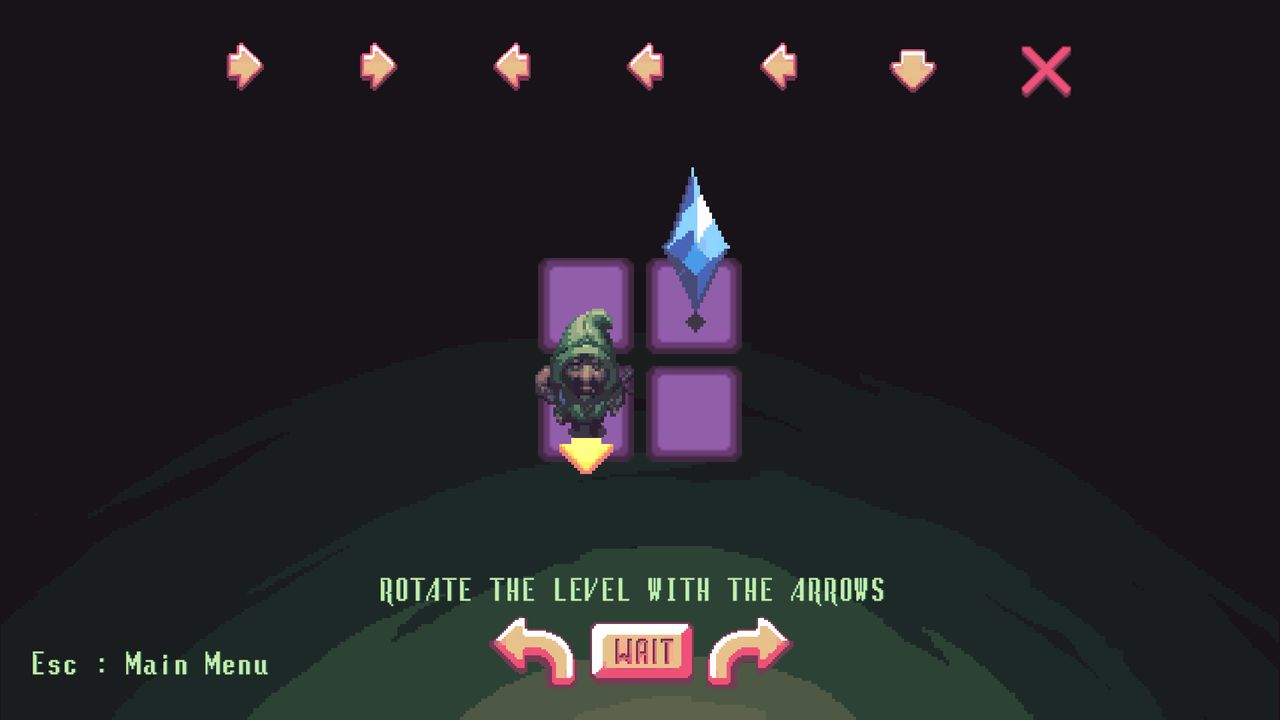
- New Player Experience — Following feedback and playtesting, it was quickly discovered that the movement mechanics of the game were very challenging to learn. To help combat this, additional levels were added to the start to better onboard new players to the movement mechanics of the game.
Implementation
During the implementation phase, my primary focus was on adding more levels and ensuring the movement system felt intuitive and easy to understand, without removing the challenge it presents:
- Twist Effect — When rotating the levels, it often felt challenging to know which direction the player and the enemies would go. With this feature, when the player hovers over the rotation buttons, the game will give a slight nudge in either direction to show what direction the level will roll.
- New Levels — Upon implementation of the original levels, I began going back and implementing basic concepts (levels that were not storyboards) by going through the iteration process again and continuously testing and adjusting the levels.
Reflection
Reflecting on the development of NecroTwister, the project was a rewarding opportunity that helped me to further hone my level design skills in the context of puzzle games. While there were challenges along the way, the final product achieved the design goals set out at the beginning of the project, and the feedback received on Itch and other sources has been overwhelmingly positive.
Successes
- Progression — The difficulty curve in the levels has been largely implemented effectively, with two levels designed to encourage players to learn the movement mechanics, and then gradually the levels introduce new enemies, tiles and challenges. (As well as new ways I tried to catch them off guard!)
- Collaborative Environment — Working in this team environment was incredibly refreshing. The team members were focused, positive and did an incredible job, the visuals, audio and code behind the project would be something teams might spend weeks on. It also offered me a chance to learn how to better communicate between a multidisciplinary team.
Areas for Improvement
- New Mechanics — The project has a high room for growth. New enemies, tiles, movements and more are all things that can greatly enhance the variety and challenge the game offers. Additionally, it can add to create a replayable game that keeps players engaged.
- Larger levels — The levels are small by design, as to not overwhelm the player. But perhaps a slightly large or non-square series of levels could break up the fairly repetitive structure of the game.
Acknowledgements
NecroTwister was developed in collaboration with these talented individuals:
- Tyler Hunter (Art Director)
- Michael Leone (Technical Lead)
- MrMusicGuy (Audio Designer)